

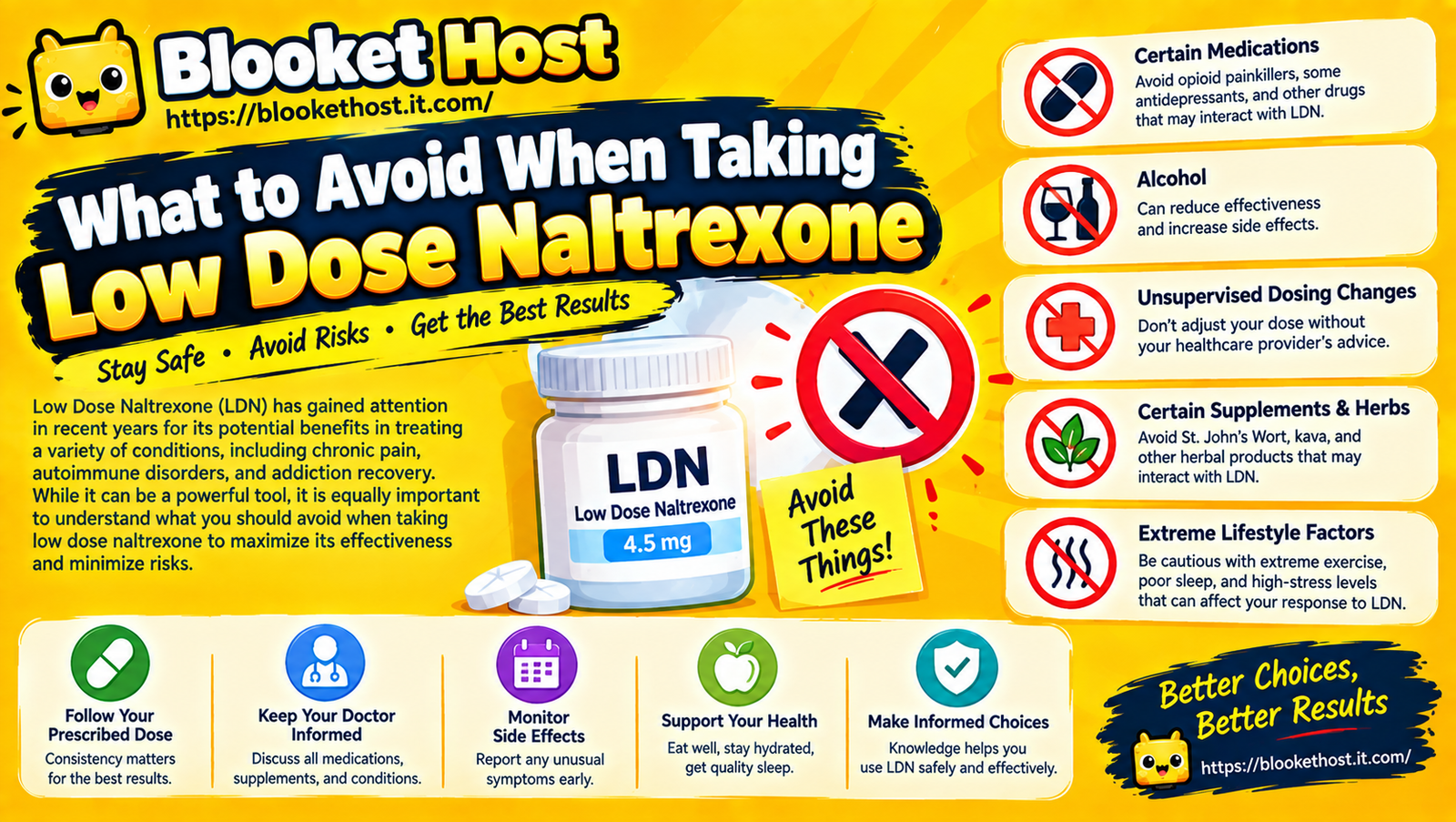
Low Dose Naltrexone (LDN) has gained attention in recent years for its potential benefits in conditions like chronic pain, autoimmune disorders, and addiction recovery. While it can be a genuinely useful tool for some patients, understanding what to avoid when taking Low Dose Naltrexone is just as important as understanding what it can do. Proper adherence, awareness of drug interactions, and a few lifestyle considerations are key to using LDN safely and getting the benefit it’s prescribed for. This guide is educational only — it isn’t a substitute for guidance from the doctor who prescribed it, and any changes to your regimen should go through them.
Why LDN’s Mechanism Matters Here
LDN is a low-dose form of naltrexone, a medication that works as an opioid receptor antagonist — meaning it blocks opioid receptors in the body. At the low doses used for off-label purposes (typically 1–5 mg daily, compared to the 50 mg+ doses used for addiction treatment), it’s generally well tolerated. But that same blocking mechanism is exactly why certain interactions matter so much: anything that relies on opioid receptors being active — whether a prescription painkiller or an illicit substance — can be seriously disrupted by naltrexone’s presence in your system.
The Most Important Thing to Avoid: Opioids
This is the single biggest interaction concern with LDN, and it applies broadly:
- Prescription opioid painkillers — including oxycodone, morphine, hydrocodone, and fentanyl.
- Illicit opioids — including heroin.
- Opioids hiding in unexpected places — some cough and cold medications contain codeine or hydrocodone, and even common anti-diarrheal medications like loperamide (Imodium) are technically opioids.
Combining opioids with naltrexone can cause precipitated withdrawal — a sudden, severe withdrawal reaction rather than a gradual one. This isn’t a mild side effect; it can bring on intense symptoms including rapid heart rate, high blood pressure, sweating, and significant distress. Because of this, most guidance recommends avoiding any opioid use for a period before starting naltrexone (often cited as 7–10 days, though this should be confirmed with your prescriber based on your specific situation).
There’s also a separate, equally important safety issue: if you’re on LDN and later need opioid pain relief for something like surgery or an injury, naltrexone can blunt or block that pain relief from working properly. This is why it’s critical that every provider treating you — not just the one who prescribed your LDN — knows you’re taking it, especially in an emergency or pre-surgical setting.
Alcohol and LDN
Alcohol is another substance worth approaching carefully while on LDN. Because naltrexone affects opioid receptor activity in the brain, and alcohol’s effects are partly mediated through related pathways, combining the two can alter how either substance affects you and may reduce LDN’s intended therapeutic effect. This doesn’t necessarily mean strict lifelong avoidance for everyone, but it’s a conversation worth having directly with your prescribing provider rather than assuming moderate drinking is automatically fine.
Certain Over-the-Counter Medications and Supplements
A few categories of common, easy-to-overlook products can interact with LDN:
- Cough and cold medications containing dextromethorphan, a mild opioid-like compound found in many over-the-counter cough suppressants.
- Anti-diarrheal medications containing loperamide, for the same opioid-related reason mentioned above.
- St. John’s Wort, a popular herbal supplement that can interact with a range of medications, LDN included.
Because supplements and OTC products aren’t always top of mind when people think about “drug interactions,” this is one of the more common ways an unintended interaction slips through. Bringing your full medication and supplement list — including anything you buy without a prescription — to every appointment is the simplest way to catch this before it becomes a problem.
Benzodiazepines: A More Nuanced Case
Benzodiazepines (“benzos”), commonly prescribed for anxiety or panic disorders, are generally approached with caution alongside LDN due to an increased risk of adverse effects and potential interference with LDN’s effectiveness. That said, this isn’t an absolute rule for every patient — some providers do prescribe both together under close monitoring when the clinical picture calls for it. This is very much a case-by-case decision that belongs with your prescriber rather than something to self-manage.
Adherence and Timing Considerations
Beyond substance interactions, a few practical habits affect how well LDN actually works:
Consistency matters. LDN is typically taken as a small, precise daily dose, and irregular use can affect how consistently it performs compared to what clinical use assumes.
Timing can affect side effects. Some patients experience sleep-related side effects (vivid dreams, insomnia) depending on when they take their dose, which is why many prescribers work with patients to adjust timing — morning versus evening — based on individual response.
Dose changes should go through your provider. Because LDN is used off-label for many conditions, dosing isn’t always as standardized as it is for other medications, which makes self-adjusting particularly risky. Report side effects rather than changing your own dose in response to them.
Who Should Be Especially Cautious
A few situations call for extra care and closer provider oversight before starting or continuing LDN:
- Anyone with recent opioid use, given the precipitated withdrawal risk discussed above.
- Anyone with chronic pain managed through opioid medication, since starting LDN could interfere with that pain management plan entirely.
- Anyone undergoing a planned surgery, since anesthesia and post-surgical pain control often rely on opioids.
- Anyone with significant liver concerns, since naltrexone at higher doses has been associated with liver effects, and while LDN’s low dosing is generally well tolerated, this is still worth discussing directly with a provider who knows your full medical history.
The Bottom Line
The core thing to avoid when taking Low Dose Naltrexone comes down to one central issue: anything that interacts with opioid receptors, whether that’s a prescription painkiller, an illicit opioid, certain OTC cough or anti-diarrheal medications, or even alcohol in some cases. Beyond that, consistent dosing and open communication with every provider involved in your care — not just the one who prescribed the LDN — are what keep the medication both safe and effective. None of this list is exhaustive, and it isn’t a substitute for a real conversation with your prescriber about your specific health history and current medications.
This article is for general educational purposes and is not medical advice. Always consult your doctor or pharmacist before starting, stopping, or combining any medication, including Low Dose Naltrexone.
