

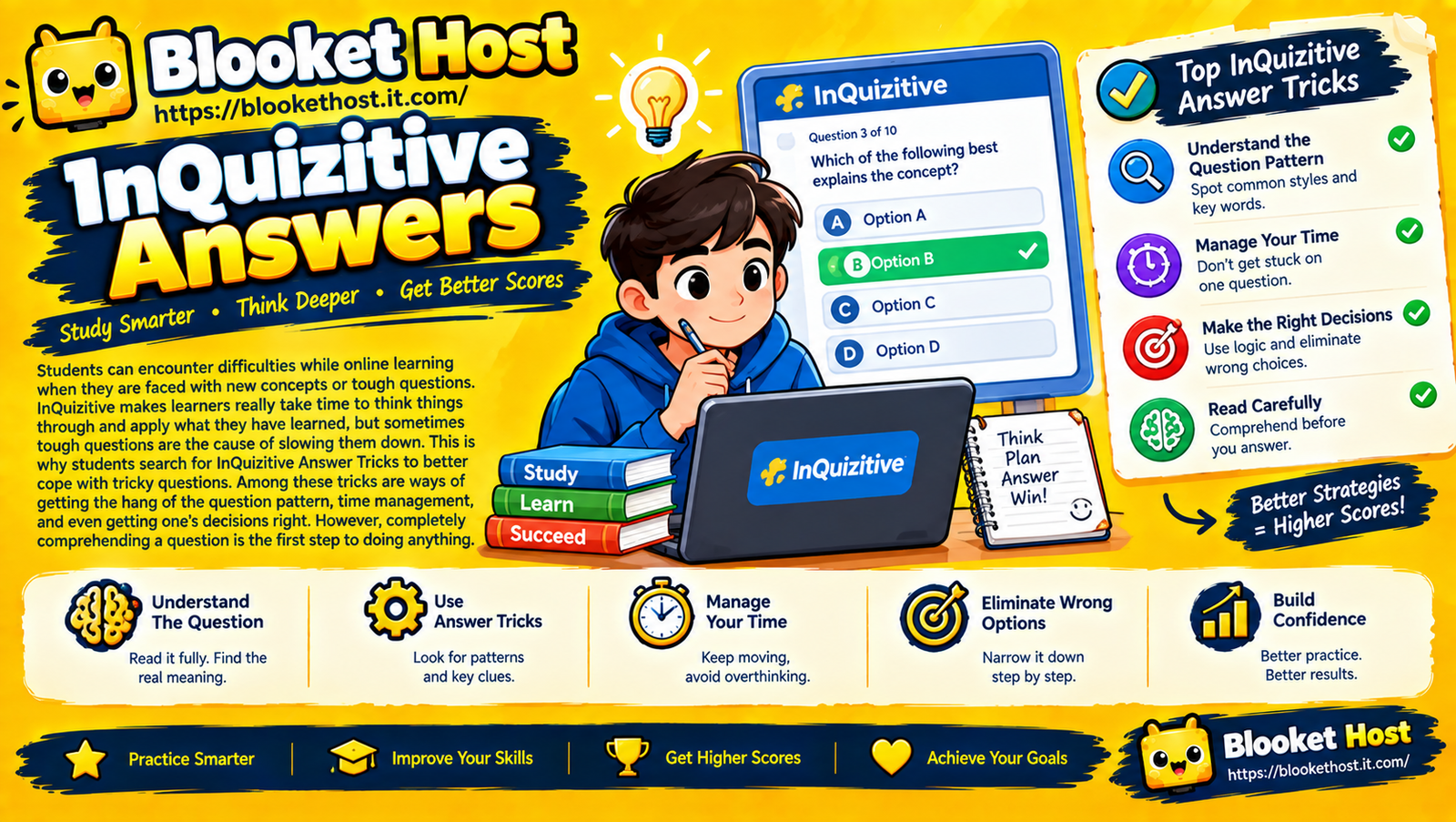
Students can run into real difficulty with online learning tools when they’re faced with new concepts or genuinely tough questions. InQuizitive is designed to make that friction productive — it’s built to make learners actually think things through and apply what they’ve learned, rather than just recognize a fact. But that same design is exactly why tough questions can slow students down and send them searching for InQuizitive answers tricks that actually work. The honest version of those tricks isn’t a shortcut around the thinking — it’s a set of real strategies around question patterns, time management, and decision-making that make the thinking itself faster and more effective.
Why “Tricks” Here Means Strategy, Not Shortcuts
It’s worth being upfront about something before diving in: InQuizitive is an adaptive, graded learning tool, which means it’s specifically built to resist being “gamed.” It adjusts question difficulty based on your performance, often allows multiple attempts with decreasing point values, and is designed around genuine comprehension rather than pattern-matching to a fixed answer key. Sites promising guaranteed answer keys or ways to see correct answers without engaging with the material aren’t offering real tricks — they’re offering a way to undermine the tool’s actual purpose, which tends to catch up with students later when the underlying material shows up again on an exam.
The strategies below are the real version: they make you faster and more accurate at working through InQuizitive’s actual question format, not a way around it.
Understand the Question Before You Touch an Answer
The single biggest factor in doing well on InQuizitive is also the simplest to state and the easiest to skip under time pressure: fully read and understand the question before evaluating any answer choice. InQuizitive questions are often written to test application of a concept rather than simple recall, which means the question itself frequently contains the exact information you need to eliminate wrong answers — if you actually read it carefully rather than skimming toward the answer choices.
A quick habit that helps: before looking at the options, try to predict what the answer should look like based on the question alone. Then compare your prediction against the actual choices. This catches a surprising number of wrong answers that “look right” out of context but don’t actually match what the question is asking.
Learn to Recognize Common Question Patterns
InQuizitive tends to reuse a handful of question structures across different topics, and recognizing these patterns speeds up your reading significantly:
- Application questions — ask you to apply a concept to a new scenario rather than just define it. These require connecting the concept to the specific details given, not just remembering a definition.
- “Which of the following is NOT” questions — these flip the usual logic, and misreading the negative is one of the most common avoidable mistakes. Slowing down specifically on negatively phrased questions catches errors before you commit to an answer.
- Multi-part or layered questions — where getting the right answer depends on correctly working through an earlier piece of reasoning first. Rushing the first part almost guarantees the second part goes wrong too.
Once you start noticing these patterns across a few question sets, your reading speed on new material improves, since you’re recognizing structure rather than processing everything as unfamiliar.
Use the Adaptive Difficulty to Your Advantage
Because InQuizitive adjusts question difficulty based on your ongoing performance, your goal isn’t necessarily to rush through as fast as possible — it’s to build accuracy early, since early accuracy shapes the trajectory of the rest of the session. Rushing through easier early questions and getting them wrong can actually work against you by keeping you in a lower-confidence difficulty band longer than necessary.
A more effective approach: treat the first several questions in any session with extra care, even if they feel easy, since a strong start tends to move you into more efficient territory faster than trying to power through carelessly and correct course later.
Time Management Without Sacrificing Comprehension
Time pressure is often what pushes students toward looking for shortcuts in the first place, so managing it well matters:
- Don’t budget time evenly across every question. Some questions genuinely take longer to reason through; trying to force a fixed time limit per question just means rushing the hard ones and reasoning carelessly.
- Flag genuine uncertainty rather than guessing immediately. If InQuizitive allows you to reconsider or revisit a question format, use that instead of locking in a rushed guess on unfamiliar material.
- Review course material before starting a session, not during it. Trying to look things up mid-question breaks your reasoning flow and usually costs more time than a few minutes of review beforehand would have saved.
Making Better Decisions Under Uncertainty
Even with strong comprehension, some questions will still feel genuinely uncertain. A few habits help here:
Eliminate before you commit. Even when you’re not fully confident in the right answer, ruling out choices you’re confident are wrong narrows your actual decision significantly, improving your odds even under real uncertainty.
Watch for absolute language. Answer choices using words like “always,” “never,” or “completely” are frequently (though not universally) less likely to be correct in nuanced, application-based questions, since most real concepts have some degree of nuance or exception built in.
Don’t second-guess a reasoned answer based on gut feeling alone. If you worked through a question methodically and arrived at an answer, switching purely based on a vague sense of doubt — without a specific reason — tends to lower accuracy rather than improve it.
The Real Payoff of Doing This the Right Way
Here’s the part that matters beyond just the grade: InQuizitive is deliberately designed to reinforce the exact material that shows up again in exams, papers, and later coursework. Students who look for genuine answer-key shortcuts often find themselves less prepared exactly where it counts most — not on the quiz itself, but on whatever assessment comes after it that assumes the underlying comprehension InQuizitive was meant to build. Investing the extra few minutes in actually understanding a tough question tends to pay off well beyond the specific quiz you’re working through.
The Bottom Line
The real “InQuizitive answers tricks” worth knowing aren’t a way to bypass the thinking the tool is designed to require — they’re habits that make that thinking faster and more accurate: reading the full question before evaluating answers, recognizing common question patterns, using the adaptive difficulty system intentionally rather than rushing it, managing time based on actual question difficulty rather than a fixed pace, and making disciplined decisions under genuine uncertainty. None of this is a shortcut, but all of it consistently improves both your quiz performance and your actual grasp of the material — which is ultimately the thing InQuizitive is there to build in the first place.
